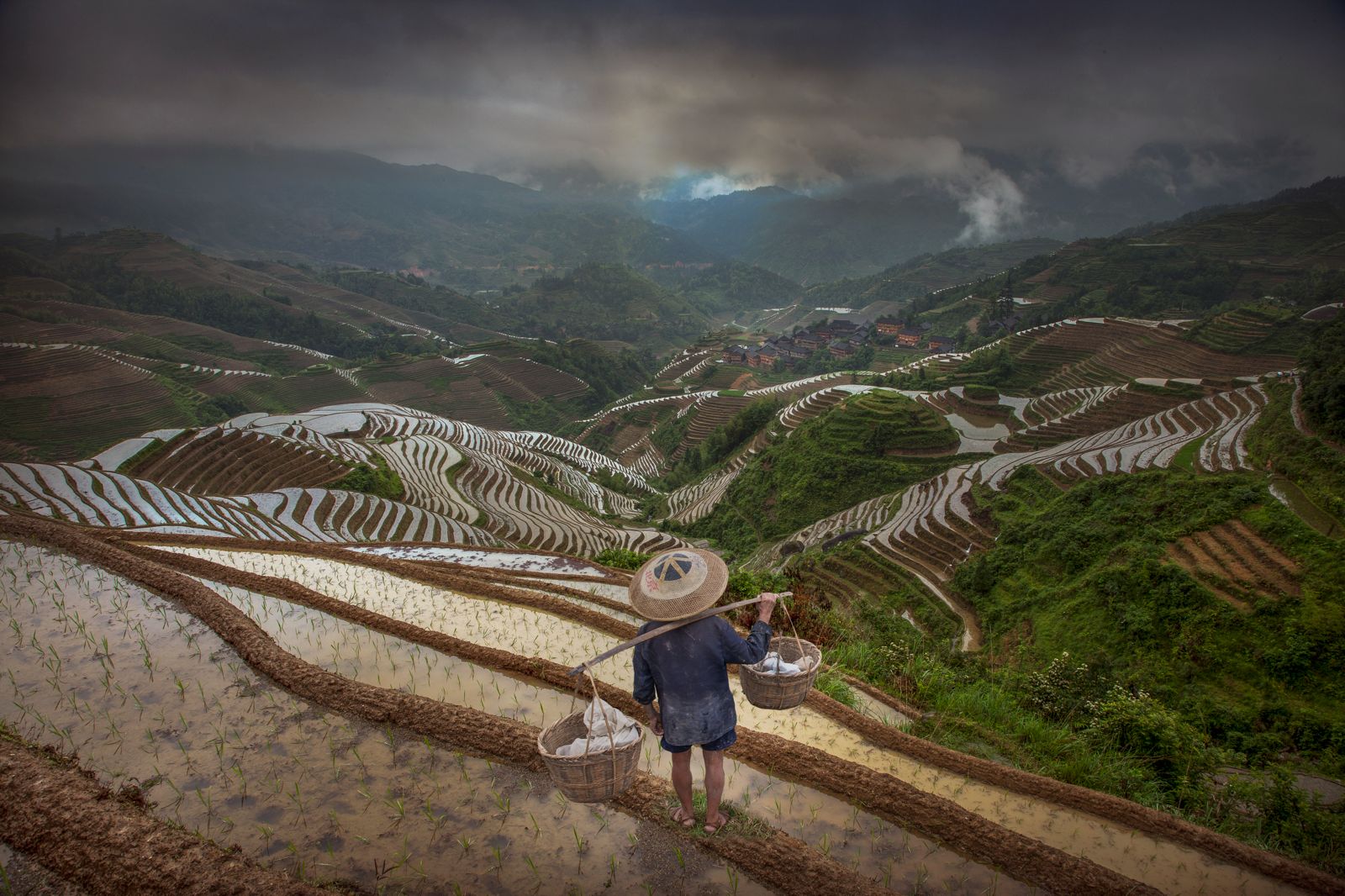
China declared the end of absolute rural poverty in February 2021, and then immediately hedged. A five-year transition period was set for the 832 counties that had just come off the poverty list, with monitoring systems built specifically to catch households sliding back. That period closed at the end of 2025. This is the first year, then, in which China governs rural poverty without the emergency machinery of Targeted Poverty Alleviation, or TPA, and the first in which anyone outside China can begin to judge whether what happened was a campaign or a lasting change.
Nepal has particular reasons to watch closely. The government that took office in March 2026 has written into its Citizen Contract a commitment to bring multidimensional poverty down to 10 percent of the population, from the 17.4 percent recorded in the last national measurement.¹ In November 2026 Nepal graduates from Least Developed Country status, and with it gives up some of the concessional finance that has cushioned public spending for decades. Now, the Bhotekoshi flood in August 2026 has just pushed tens of thousands of households in Rasuwa, Nuwakot and Dhading back toward the kind of vulnerability that poverty programmes exist to prevent. Whether any part of China’s method transfers is no longer a seminar question.
What follows compares methods rather than money. Nepal cannot spend what China spent, and nothing here pretends it can. What can be compared is how the work was organised, who carried it out on the ground, and why the big democracies of South and Southeast Asia have found the same thing so hard to do.
How China did it: forty years of narrowing the target
TPA is usually described as the thing China did to end poverty. It is more accurate to call it the last thing. Liu, Feng, Wang and Qiu divide China’s anti-poverty effort into four stages: relief-type alleviation from 1978 to 1985, development-oriented alleviation from 1986 to 2006, development combined with a social security system from 2007 to 2012, and targeted alleviation from 2013 onward.² Across those four decades, by their count, the rural population under the current poverty line fell by 739.9 million, and China accounted for more than 70 percent of global poverty reduction. Household-level targeting only became feasible because three decades of broad-based growth had already shrunk the poor population to something a bureaucracy could count. In 2013 that population stood at just under 99 million. Going household by household through 400 million people would have been administratively absurd. Going through 99 million was simply less difficult.
Identification came before intervention. In Yeping town in Jiangxi province, civil servants went door to door across a population of roughly 70,000 to find the households that belonged in the programme, and versions of that exercise were repeated, with local variation, across the country.³ Once a household was on the list it was sorted into a track rather than handed a standard benefit. Liu and colleagues describe five pillars: households with potential for quick uplift were steered into industry; those in remote mountain areas with poor access to resources were relocated to towns or plains; households in conservation zones received ecological compensation payments; educational support was expanded to interrupt intergenerational poverty; and disabled residents got dedicated services.⁴ The state also moved its own people to where the problem was. In 2016 alone, more than 775,000 government employees were dispatched to rural areas to work on poverty alleviation.⁵
The results hold up under independent examination. Using panel data from 2010 to 2018, Chang, Ma, Vatsa and Li found that TPA participants earned notably more than comparable non-participants.⁶ Tang, Gong and Ma found that the programme narrowed the urban-rural income gap between 2010 and 2020, and that it did so more effectively in China’s poorer western regions than on the wealthy eastern coast.⁷
The part most outside observers have not caught up with is what came after 2021. Over the transition period, according to figures released in late 2025, authorities provided targeted assistance to more than 6 million people identified as at risk of falling back into poverty, supported the employment of more than 30 million workers who had previously been lifted out, and invested a cumulative 850.5 billion yuan in formerly impoverished areas.⁸ The 832 formerly poor counties each developed two or three leading industries, with combined output above 1.7 trillion yuan, and roughly three-quarters of their once-poor population now has an income link to a new agricultural enterprise.⁹ Per capita disposable income in those counties reached 18,627 yuan in 2025, growing faster than the rural national average.¹⁰ In late August this year the National People’s Congress Standing Committee reviewed a report on consolidating these gains, and Vice Premier Liu Guozhong committed the government to treating relapse monitoring as a permanent function rather than something to be wound down.¹¹ Xi Jinping put the logic plainly during the transition: the hardest part of a victory is holding on to it.
Why the big democracies struggle to copy it
The countries most often told to learn from China are its population peers: India, Pakistan, Bangladesh and Indonesia. Their difficulty with TPA is worth taking seriously because it is structural. It cannot be explained by a lack of will, or in India’s case by a lack of money.
Start with identification. TPA ran on a single, nationally maintained household register, updated by a unified cadre system that answered upward. India’s flagship rural housing scheme and several other central programmes still draw their beneficiary lists from the 2011 Socio-Economic and Caste Census, because the decennial census due in 2021 was postponed and is only now being conducted. Pakistan, unusually, built something close to the Chinese model. Its National Socio-Economic Registry surveyed some 27 million households, around 167 million people, using a proxy-means test, and the Benazir Income Support Programme BISP uses that registry to reach a beneficiary base that will grow to 10.2 million households this fiscal year.¹² So the register exists. What flows through it is another matter. The IMF’s assessment found that BISP transfers amount to roughly 9 percent of the average consumption of the poorest fifth of households, against a global best-practice benchmark of 25 percent.¹³ A country can build the targeting apparatus and still lack the fiscal room to make it count.
Then there is the question of who delivers. China could send 775,000 officials into the countryside in a single year and station resident cadres in villages because its civil service, as Zhu documents, keeps working through local leadership turnover and takes its direction from the centre.¹⁴ Zhou describes a bureaucracy shaped at once by Weberian, Confucian and organisational logics, one in which a rural posting is a career stage rather than a punishment.¹⁵ Federal democracies cannot direct state or provincial civil servants that way, and their officials are rarely rewarded for going to the poorest districts. India’s poverty programmes run through 28 state governments of uneven capacity and uneven political alignment with New Delhi.
Political continuity is the third condition, and the recent record of Nepal’s neighbours shows what happens without it. Bangladesh’s extreme poverty rate had been falling for two decades; the World Bank projected it would rise from 7.7 percent to 9.3 percent in the 2025 fiscal year, pushing roughly three million more people below the line in the wake of the 2024 political upheaval.¹⁶ Pakistan’s national poverty rate, by its own budget documents this year, rose to 28.9 percent from 21.9 percent in 2018-19; at the World Bank’s lower-middle-income line of $4.20 a day, 44.7 percent of Pakistanis are poor.¹⁷ A decade of gains can be undone in two years of rupture and fiscal crisis. Heilig and colleagues made the sequencing argument twenty years ago: a country must first get its economic system in order, then develop a regional development concept, and only then apply highly targeted household measures; foreign aid poured into that sequence out of order does not reach the poor.¹⁸ TPA’s unstated precondition, put simply, is a state that does not lose a decade to turmoil.
The fourth obstacle is a choice rather than a constraint, and Indonesia shows it clearly. Instead of precision targeting, President Prabowo’s government went for a universal flagship. The Free Nutritious Meals programme launched in January 2025 with an initial budget of around $4.3 billion, was topped up with a further Rp100 trillion, and by October 2025 was feeding some 35.4 million schoolchildren and pregnant women a day through nearly 11,900 kitchens.¹⁹ Universal programmes are politically easier in a democracy. Nobody has to decide who is poor enough to qualify and nobody is left off a list. They are also fiscally heavy and administratively blunt, and the string of food-poisoning incidents that has dogged the Indonesian rollout shows how logistics at that scale strain even a well-resourced state. Precision is the thing democracies find politically expensive. Somebody has to rule that one household qualifies and its neighbour does not, and that ruling can be contested at the next election.
None of this amounts to failure. India’s numbers are extraordinary by any standard. Extreme poverty at the World Bank’s $3-a-day line fell from 27.1 percent in 2011-12 to 5.3 percent in 2022-23, moving roughly 269 million people above it, and the national multidimensional headcount fell from 29.17 percent to 11.28 percent over a similar period, some 248 million people.²⁰ India got there through broad growth combined with very large, near-universal schemes for housing, cooking gas, bank accounts and rural employment, without household-level precision. Which route a country can take depends heavily on its size.
That is what makes one Indian state so interesting. On 1 November 2025 Kerala became the first state in India to declare itself free of extreme poverty. It did so through an Extreme Poverty Eradication Programme, launched in 2021, that identified 64,006 extremely poor families through detailed household surveys covering food, health, livelihood and shelter, and then drew up a micro-plan for each family individually. By the time of the declaration, 59,277 of those families had been lifted out.²¹ Operationally, that is TPA. It worked because it ran at the scale of one state of about 35 million people, with a unified administration, a functioning local government tier, and cross-party agreement that the exercise was worth doing. Nothing comparable has been achieved at the scale of India as a whole, and the reason is scale rather than any shortage of ideas.
Nepal in 2026: what the field evidence shows
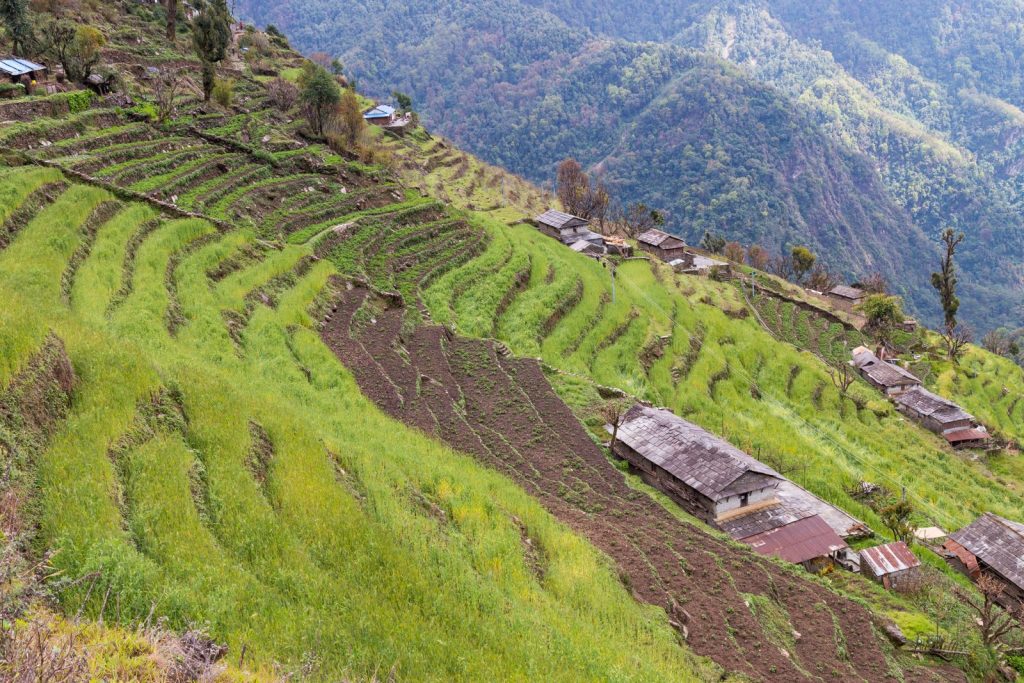
By the Fourth Nepal Living Standards Survey, covering 2022/23, 20.27 percent of Nepalis live below the national poverty line, down from 25.16 percent in 2010/11.²² That is close to six million people. Rural poverty, at 24.66 percent, runs well above urban at 18.34 percent, and the provincial spread is severe: Sudurpaschim at 34.16 percent, Karnali at 26.69 percent, and Madhesh at 22.53 percent and home to a quarter of the country’s poor. Multidimensional poverty stood at 17.4 percent in the last national measurement, down from 30.1 percent in 2014.²³ Income inequality is high, with a Gini of 47, youth unemployment is 22.7 percent, and remittances worth close to a third of GDP keep many households above a line that domestic employment could not.²⁴ Oxfam’s assessment counted more than 8.1 million people in poverty and noted that women, who carry the unpaid care economy, are disproportionately among them.²⁵
What matters more than the headline numbers is what happens at the point of delivery, and here a set of interviews conducted at the Mechinagar Municipality Office in Jhapa in January 2023 is unusually direct.²⁶ Mechinagar covers 192.6 square kilometres, has a population above 133,000, sits on the main eastern crossing into India, and is the kind of municipality the central government pays attention to. Its senior community development officer summed up the fiscal effect of federalism in one image. The municipal budget had grown from roughly 4 crore rupees before the federal restructuring to 1.5 arba, or 15 billion, after it. But the money arrived “topic-oriented,” tied to nationally chosen programmes, leaving “little room for innovation and improvisation.” Infrastructure took up about 90 percent of projects. The centre, in the officer’s words, “takes too much control,” and the provincial government, which understood local realities best, had no effective role at all. Two of the three officials interviewed rated provincial government cooperation at zero and one out of five. All three rated public cooperation at four.
That last score deserves a pause, because it is the reverse of a capacity problem. The employment coordinator reported that applications to the Prime Minister’s Employment Programme had fallen from 4,000 to 400 as the scheme found people work, which is a real success. The coordinator also reported that the budget “keeps decreasing every year” and that hill districts got more effective support than the tarai. The senior engineer described the Suraksit Nagarik Awas housing programme, which built homes for 249 households in 2021/22, as undercut by what it lacked: money for good materials, any budget at all for follow-up and repairs, and a beneficiary list free of political favouritism. Engineers, the same officer said, were not consulted on budget allocations. All three named middlemen, the dalals whom Nelson has documented as a fixture of Nepali public offices, as capturing government contracts.²⁷ And the municipality’s own 2022 regulation lists the only categories a community project may fall into: roads, irrigation, drinking water, health facilities, school infrastructure, forestry, and tourism footpaths.²⁸ Tourism promotion, e-commerce, ecological compensation, or any of the tailored tracks that made TPA work do not appear, because the list has no room for them.
Mechinagar’s budget rose nearly forty-fold. Its problems are about who decides, who is physically present, what the people on the ground are allowed to attempt, and whether anyone comes back once the ribbon has been cut.
What TPA can teach Nepal
None of what follows requires China’s political system, and all of it fits inside the federal structure Nepal’s constitution already provides.
“Build the list first.” TPA’s precision came from a single household-level register, kept locally and updated continuously. Nepal’s poverty data is scattered across the Janata Awas beneficiary rolls, the PMEP registrants, the social security allowance lists and provincial surveys, and earlier attempts at a national poor-household identity card never reached full coverage. Kerala built a survey-based register of its extremely poor families in four years across 35 million people. Nepal has 30 million. The ward is the natural unit, and a ward-level list that is public, open to challenge and corrected in the open is also the strongest available check on the political favouritism the Mechinagar engineer described.
“Put people in the wards.” China’s 775,000 dispatched officials were the delivery mechanism; the register was only a map. Nepali civil servants compete to stay in Kathmandu and the larger cities, a pattern Paudyal has written about at length, and the Mechinagar interviews described staff “divided by the budget’s allocation and not their area of proficiency.”²⁹ A rural-posting incentive tied to promotion, plus a resident officer responsible for a defined cluster of wards, would cost a fraction of any infrastructure line and would change what that infrastructure line delivers.
“Let municipalities try things.” The most transferable habit in Chinese poverty policy is practical rationality: pilot, measure, then scale. China’s poorer western and central regions were allowed to try tourism, e-commerce, religious-site restoration and ecological compensation as poverty tools; the tourism track alone drew 3.2 billion rural visits and 850 billion yuan in revenue in 2019.³⁰ Nepal’s municipalities are handed a fixed menu. Their constitutional powers exist on paper; the conditional, topic-tied budget the Mechinagar officer described is what stops them being used. A modest unconditioned share of the local grant, ring-fenced for pilots that get evaluated, would cost little and reveal a great deal.
“Assume relapse.” China’s decision to treat 2021 as the opening of a five-year monitoring period, rather than the closing of a campaign, is the single most important design choice in the whole story, and the one Nepal’s programmes most consistently lack. A house built with no maintenance budget returns its occupants to poverty on a schedule set by the monsoon. The Bhotekoshi flood is precisely the shock a relapse-monitoring system exists to catch, and Nepal has no such system. Building one costs less than the reconstruction it would help direct.
“Take the middleman out of the pipeline.” China’s poverty programmes had no equivalent of the dalal, and the Mechinagar officials were unanimous that middlemen were capturing contracts and beneficiary access. Direct digital transfers, public ward-level beneficiary lists, and an enforced ban on agents at government offices are individually mundane. Together they dismantle the mechanism through which a 15-billion-rupee budget produces a 4-crore result.
“Some things should stay in China.” Large-scale relocation of mountain communities to the plains was a policy choice with a coercive edge that Nepal’s constitution does not allow and its geography does not demand. The pressure a Chinese cadre works under carries costs a democratic civil service should not import. And the political continuity that let China plan across decades cannot be copied directly. Nepal would have to build it institutionally, through career civil service design and multi-year budget commitments.
A Kerala-sized problem
Nepal’s population is that of a mid-sized Indian state. In scale it resembles Kerala far more than India, and the precision that TPA achieved, which the large democracies have found so hard to reproduce nationally, has just been demonstrated at Kerala’s scale inside a democratic, federal system. What binds Nepal is whether a household register exists, whether officials are actually present in the poorest wards, and whether municipalities are allowed to attempt something other than a road. The RSP’s pledge to bring multidimensional poverty to 10 percent will be judged, fairly, on outcomes. Those outcomes will depend on whether these preconditions are in place within the next two years, before the concessional finance that has masked their absence narrows after November’s LDC graduation. China needed forty years and enormous sums to establish that method matters more than money once money runs short. Nepal does not have forty years, and after November it will have less money. What it does have is the benefit of an answer that has already been worked out next door.
—
References
- Rastriya Swatantra Party, “Bacha Patra 2082 (Citizen Contract): 100 Pillars of Policy Departure”(Kathmandu, 2026); National Planning Commission, Nepal Multidimensional Poverty Index 2021: Analysis Towards Action (Kathmandu: Government of Nepal, 2021).
- M. Liu, X. Feng, S. Wang and H. Qiu, “China’s Poverty Alleviation over the Last 40 Years: Successes and Challenges,” Australian Journal of Agricultural and Resource Economics 64, no. 1 (2020): 209–28.
- “Targeted Poverty Alleviation: The Chinese Path to Fighting Poverty,” CGTN, February 23, 2021.
- Liu et al., “China’s Poverty Alleviation,” 2020.
- I. Rahman, “Poverty Alleviation with Chinese Characteristics: Lessons for Developing Nations,” China.org.cn, May 18, 2021.
- Q. Chang, W. Ma, P. Vatsa and J. Li, “Has the Targeted Poverty Alleviation Program Improved Household Welfare in Rural China?,” Journal of Policy Modeling 44, no. 5 (2022): 1041–56.
- J. Tang, J. Gong and W. Ma, “Narrowing Urban–Rural Income Gap in China: The Role of the Targeted Poverty Alleviation Program,” Economic Analysis and Policy 75 (2022): 74–90.
- “5 Years after Eliminating Absolute Poverty: Where China Stands and What Comes Next,” State Council Information Office, November 20, 2025.
- “How China Advances Sustainable and Balanced Rural Revitalisation,” CGTN, February 24, 2026.
- “Under Xi, China Builds on Anti-Poverty Gains with Rural Revitalisation Drive,” Xinhua, May 28, 2026.
- “China Vows to Consolidate Poverty Alleviation Gains, Advance Rural Revitalisation,” China.org.cn, August 27, 2026.
- World Bank, “Reaching the Poorest through Strengthening the Social Safety Net System in Pakistan,” April 22, 2015; “Pakistan Expands Social Protection Coverage, Targets 10.2M BISP Beneficiaries,” Nukta, 2026.
- “IMF Report: Indicative Target to BISP Missed by Wide Margin,” Business Recorder, 2022, reporting the IMF’s Pakistan country report.
- L. Zhu, “How Does the Chinese Bureaucracy Sustain Economic Growth without Stable Local Political Leaders? Stratified Spatial Mobility and the Role of Stable Political Elites in Local Governments,” Journal of Asian Public Policy (2021).
- X. Zhou, “Chinese Bureaucracy through Three Lenses: Weberian, Confucian, and Marchian,” Management and Organization Review 17, no. 4 (2021): 655–82.
- World Bank, Bangladesh Development Update (Dhaka, April 2025).
- Nukta, “Pakistan Expands Social Protection Coverage”; World Bank, Pakistan Poverty and Equity Brief, Spring 2025.
- G. K. Heilig, M. Zhang, H. L. Long, X. B. Li and X. Q. Wu, “Poverty Alleviation in China: A Lesson for the Developing World?,” Geographische Rundschau (2006): 4–13.
- Niniek Karmini, “Indonesia Launches Free Meals Program to Feed Children and Pregnant Women to Fight Malnutrition,” Associated Press, January 6, 2025; “Indonesia Allocates $6.5 Billion to Expand Free Nutritious Meals Program,” Investortrust, January 2025; “Indonesia President Prabowo Claims 8% Growth Is Possible through Free Meals Program,” The Jakarta Post, October 17, 2025.
- World Bank, India Poverty and Equity Brief, Spring 2025; NITI Aayog, Multidimensional Poverty in India since 2005–06, discussion paper (New Delhi, 2024).
- Government of Kerala, Extreme Poverty Eradication Programme, figures as reported at the state’s declaration of November 1, 2025.
- National Statistics Office, Nepal Living Standards Survey IV (2022–23): Statistical Report (Kathmandu: Government of Nepal, 2024).
- National Planning Commission, Nepal Multidimensional Poverty Index 2021.
- World Bank, Nepal Poverty and Equity Brief, Spring 2025.
- D. R. Khanal et al., Fighting Inequality in Nepal: The Road to Prosperity (Oxford: Oxfam International, 2019).
- Author interviews with the Community Development Officer, Employment Coordinator and Senior Engineer, Mechinagar Municipality Office, Jhapa, January 2023.
- A. Nelson, Between Social Evil and Social Necessity: The Dual Meaning of Kathmandu Dalals (paper presented at the Annual Kathmandu Conference on Nepal and the Himalaya, 2015).
- Mechinagar Municipality Office, Regulations for Building Community Projects (Mechinagar, 2022).
- B. Paudyal, “Nepal’s Uncivil Servants,” Nepali Times, February 25, 2022.
- I. Rahman, “Poverty Alleviation with Chinese Characteristics: Lessons for Developing Nations,” China.org.cn, May 18, 2021.