The UN climate process rests on a simple premise: that the states and communities least responsible for the crisis, and most exposed to its consequences, get a real hand in shaping the response. COP29 in Baku and COP30 in Belém, the two most recent summits, have tested that premise against a harder reality. Who actually gets into the room? Whose language survives to the final text? The climate crisis keeps moving regardless of the answer, interstate wars are pulling the global economy into instability, and the UN itself is stretched thin trying to manage crises inside and outside its own mandate. COP31 is shaping up to be the most consequential summit in years.
Baku: a finance target and a walkout
COP29, billed as the “Finance COP,” was meant to settle what wealthier nations owe poorer ones to manage a crisis they did comparatively little to cause. What it settled on was a New Collective Quantified Goal of $300 billion a year by 2035. That is three times the $100 billion pledged in Cancún back in 2010, but a fraction of the $1.3–5 trillion a year developing-country coalitions had argued for, and well short of what the UN’s own figures say developing countries’ national climate plans actually cost at roughly $455–584 billion annually. During negotiations, references to historical responsibility and to the Convention’s principle of common but differentiated responsibilities were dropped from the draft text entirely. The Alliance of Small Island States and the Least Developed Countries bloc walked out on 22 November, two days before the summit closed, citing a lack of inclusivity in how the deal was built.
Who was in the building mattered too. The Kick Big Polluters Out coalition’s analysis found 1,773 fossil fuel lobbyists accredited to COP29, more than the combined delegations of the ten most climate-vulnerable countries at the summit, who together totalled 1,033 people. Protest, meanwhile, was confined to designated zones, continuing a pattern set by the two prior hosts, Egypt and the UAE, and now by Azerbaijan itself; all three restricted public dissent at their COPs.
Belém: protest returns, but the text does not move
COP30 marked a genuine departure in one respect. Held in the Brazilian Amazon, it drew the largest Indigenous participation in COP history, more than 3,000 representatives, and saw the first major climate protests at a UN summit since 2021, after three straight years of host countries that had not allowed them. Tens of thousands marched through Belém. Members of the Munduruku Nation blockaded the negotiating venue’s main entrance over extractive activity on their lands, and Brazil subsequently demarcated two Indigenous territories in response.
Access and outcome, though, pulled in opposite directions. Only 14% of the roughly 2,500 Indigenous Brazilian delegates present received accreditation to enter the actual negotiating rooms. The final agreement, adopted under the name “global mutirão,” contained no roadmap to phase out fossil fuels and no explicit mention of them at all, despite public support for one from Brazil’s own environment minister, Marina Silva. Fossil fuel lobbyist attendance actually fell slightly in absolute terms, to 1,602 accredited individuals. However, overall attendance at COP30 dropped even more sharply, so their share of total participants rose by roughly twelve percent, to about one in every twenty-five people in the building. That was still enough to outnumber the Philippines’ own delegation roughly fifty to one, in the same fortnight the Philippines was absorbing back-to-back typhoons. The Loss and Damage fund agreed in principle at COP28 remained, by COP30, funded to the tune of $582.5 million in actual contributions, against needs measured in the hundreds of billions.
There was real progress at Belém too. A Brazilian-led tropical forest fund reached $6.6 billion in pledges toward a $25 billion target, and fifteen governments committed to protecting 160 million hectares of Indigenous and community-held land by 2030. Both, though, are voluntary commitments that depend on continued goodwill, sitting alongside a negotiated text that did little to move the needle on binding obligation.
 What “corporate capture” means in practice
Put the two summits side by side and a mechanism becomes visible, not just a mood. Fossil fuel interests do not necessarily argue their case more persuasively than a coalition of small island states or Andean farmers does. The process itself does a lot of that work for them. Consensus rules let a handful of governments block or hollow out draft language. Accreditation systems, controlled by the host country, can admit industry delegations while capping the number of representatives from the communities that industry’s product displaces. Later when obligations are supposed to turn binding, the process tends to fall back on voluntary funds instead, the kind that get pledged to with much fanfare and then funded quietly, or not at all. No single actor needs to act in bad faith for the aggregate result to look this lopsided.
What the gap costs
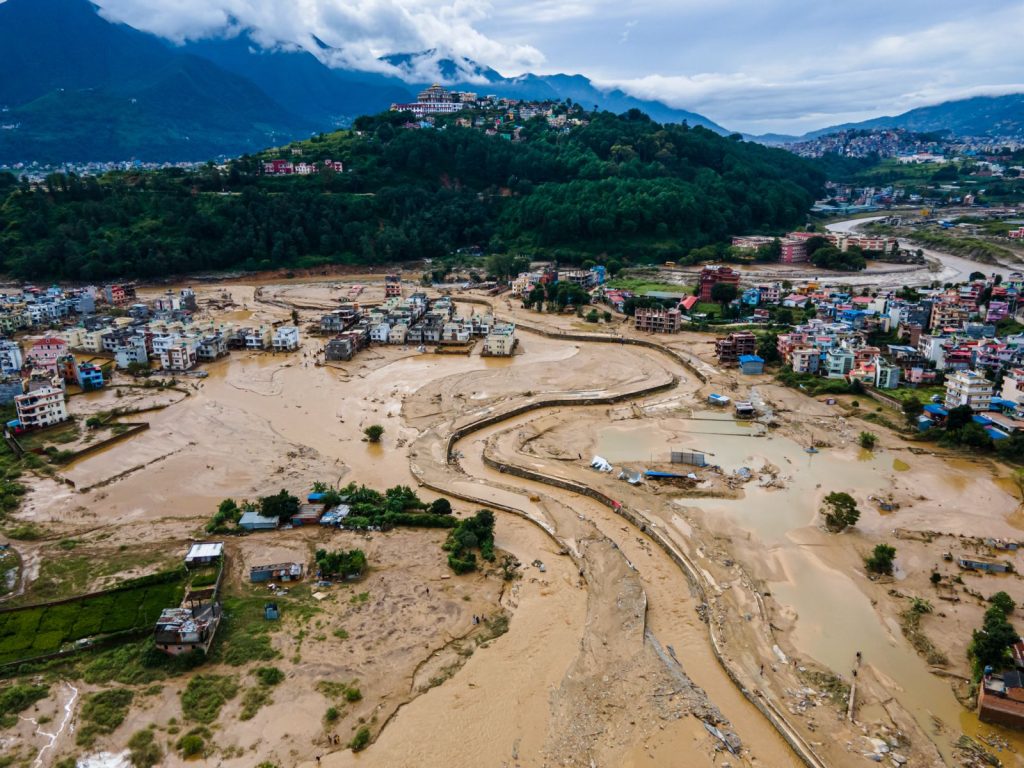
The distance between a negotiated finance target and an actual disaster is not abstract. In August 2026, an ice-and-rock collapse above the Nepal-China border sent a wall of water and debris down the Bhotekoshi and into the Trishuli river system. It devastated Rasuwa and neighbouring districts, destroyed roads and bridges, knocked out roughly a tenth of the country’s hydropower capacity, and killed more than a thousand people in the following week alone. Reconstruction estimates run as high as $5 billion. Nepal did not cause the glacial instability now playing out above its own rivers. The Fund for Responding to Loss and Damage exists, in principle, to answer disasters of exactly this kind. In practice, its total global contributions to date would not cover a fifth of one country’s rebuilding bill.
Why Antalya carries different stakes
COP31 convenes in Antalya, Turkey, this November, under an unusual co-hosting arrangement: Australia leads a parallel track on Pacific and small-island finance needs, while Turkey runs the main summit. It arrives at a genuinely harder moment than either of its two predecessors. Since February 2026, a war between the United States and Israel on one side and Iran and its regional allies on the other has pulled global military spending and diplomatic attention toward the Middle East, and repeated disruption to shipping through the Strait of Hormuz has added a level of energy-market instability the climate process has not had to negotiate around before. Whatever one’s view of that conflict, its practical effect on COP31 is straightforward. It competes for the same finite pool of diplomatic bandwidth and fiscal headroom that climate finance negotiations depend on, at precisely the moment the finance gap identified at Baku and left unresolved at Belém needs to close rather than widen.
The unchanged question
Across two summits, the Global South’s position has not moved. It was never framed as a request for generosity, but as an argument that historical responsibility carries a corresponding obligation. Twice now, that argument has been heard inside the negotiating rooms and left out of the operative text. The real test at Antalya will not be the size of the pledges announced on opening day. It will be whether the mechanisms that produced Baku’s and Belém’s outcomes are still standing by the end of it: voluntary funds instead of binding ones, accreditation systems host countries control, and consensus rules a handful of states can use as a veto.