In 2005 every member of the United Nations signed up to a sentence. If a state proved unable or unwilling to protect its own population from genocide, war crimes, ethnic cleansing or crimes against humanity, the international community would act, through the Security Council, “in a timely and decisive manner.” That sentence is the Responsibility to Protect, and it turns twenty-one this year. Since 2005 the Council has adopted 99 resolutions and 17 presidential statements that refer to it.¹ In the same period the Council has been unable to agree on any meaningful response to mass atrocities in Syria, Myanmar, Sudan and Gaza, and in 2024 it cast more vetoes than in any year since 1986.² A doctrine can survive as vocabulary long after it has stopped working as a rule. That is roughly where R2P stands.
For a think tank in Kathmandu this is more than aquestion of international legal theory. Nepal is, depending on the month, the first- or second-largest contributor of troops to UN peacekeeping in the world.³ When the Council writes a civilian-protection mandate it cannot agree how to enforce, the soldiers who inherit the gap are often Nepali. And as a small state wedged between two giants, one of which holds a veto and the other of which wants one, Nepal has a direct stake in whether the rules governing intervention are consistent or discretionary. The history of how R2P lost its coercive credibility is worth setting out, because the lesson is not the one either its champions or its critics usually draw.
The month that decided everything
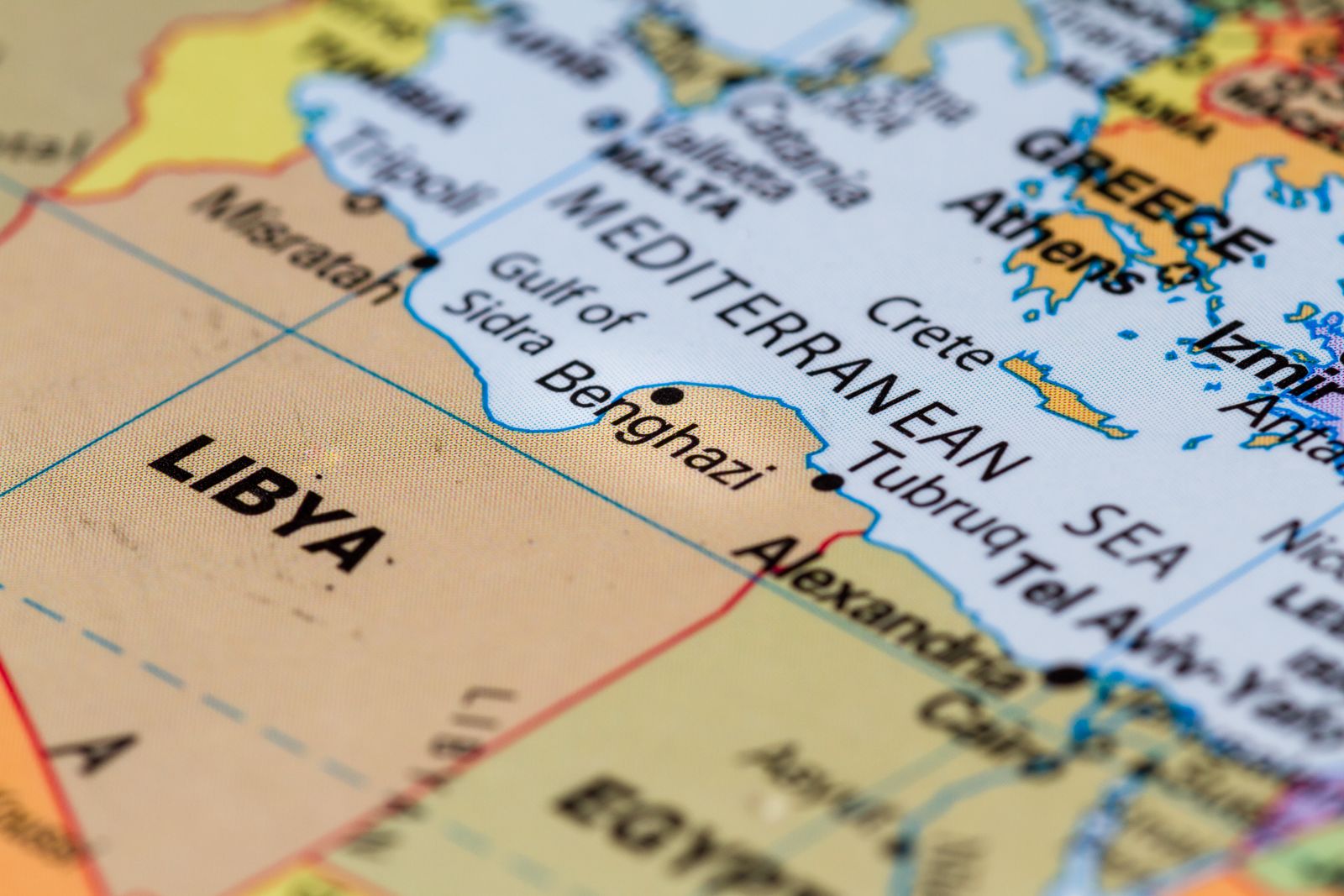
R2P’s first full military use came in Libya in March 2011. The sequence was fast. Muammar Gaddafi’s forces fired on protesters, his 22 February speech promised to “cleanse Libya house by house,” and the Arab League, the African Union and the Human Rights Council all called for action. Resolution 1970 imposed sanctions and referred Libya to the International Criminal Court on 26 February. Resolution 1973, adopted on 17 March, authorised “all necessary measures” to protect civilians. Russia, China, India, Brazil and Germany abstained rather than voting against, and each cited the same reason: the regional organisations wanted it.⁴ China’s ambassador told the Council that Beijing “attached great importance” to the Arab League’s position; that was the reason for abstaining rather than vetoing.⁵ What is striking in the verbatim record is how rarely anyone mentioned R2P at all. Only France and Colombia used the phrase, and both were talking about Libya’s own responsibility, not the international community’s.⁶ The resolution passed on regional politics, not on principle.
NATO’s campaign then went well beyond the mandate. Ramesh Thakur’s account is the standard one: the alliance ignored restrictions on targeting Gaddafi directly, dismissed ceasefire feelers, took a side in a civil war and broke the UN arms embargo by supplying the rebels.⁷ Eight months later Gaddafi was dead. Russia’s ambassador had warned in March that responsibility for “the excessive use of outside force” would fall on those who used it; by October, in the first Council debate on Syria, he described the NATO interpretation of the Libya resolutions as the model his government now feared for every future R2P case.⁸ China’s representative was blunter the following year, warning against “military intervention under the pretext of humanitarianism.”⁹ Vladimir Putin called Libya a “bitter experience” and said Russia would oppose any resolution on Syria that could be read as a signal for military action.¹⁰ India’s ambassador said Libya had given R2P a bad name.¹¹
Thakur’s verdict was that Syrians had paid the price of NATO’s excesses in Libya.¹² Justin Morris predicted that the pendulum had swung and that “the prospects for future invocations of R2P as a basis for intervention by force are now significantly diminished.”¹³ Both were right, and the record since has been considerably worse than either anticipated.
What became of the two cases
Syria is the clearest measure. Russia vetoed thirteen Council resolutions on Syria between 2011 and 2019, China seven, always on the ground that Syrian sovereignty had to be protected from a Libya-style intervention.¹⁴ The war ran for thirteen years, killed more than half a million people and displaced roughly eleven million. Then, in December 2024, Bashar al-Assad’s government fell in eleven days to an offensive led by Hayat Tahrir al-Sham, a group that had grown out of al-Qaeda’s Syrian affiliate. Assad fled to Russia.¹⁵ No Council resolution authorised it and no R2P language accompanied it. The vetoes had not protected Syrian sovereignty from external interference; Turkish forces remain in the north and Israeli forces have pushed into the south. Nor did they protect Syrians. What they protected, for thirteen years, was one government. The transition since has been marked by sectarian killings of Alawites and Druze, some by fighters affiliated with the new authorities, and the same Western governments that vetoes once blocked have now lifted sanctions and received President Ahmed al-Sharaa in Washington.¹⁶
Libya, fifteen years on, has not held a national election since the intervention and remains split between rival administrations in Tripoli and the east. The question John Dietrich posed in 2013, what responsibility the international community carries after an R2P intervention, has never been answered.¹⁷ The two cases together produce an uncomfortable symmetry. Intervention produced a failed state; non-intervention produced a thirteen-year war that ended by force anyway. Neither outcome has anything to recommend it as a model.
The pendulum in 2026
What Libya did to R2P was to fuse it, in the minds of a majority of the Council’s permanent members, with regime change. Everything since has reinforced the fusion. Russia invoked the language of genocide to justify invading Ukraine in 2022, turning R2P’s vocabulary into a pretext for aggression. In Sudan, a war that began in April 2023 has killed at least 40,000 people by the UN’s conservative count, displaced 14 million, and produced confirmed famine in El Fasher and Kadugli.¹⁸ In November 2024 a British and Sierra Leonean draft demanding that the Rapid Support Forces halt attacks on civilians drew fourteen votes and a Russian veto.¹⁹ El Fasher fell to the RSF the following October amid what the UN human rights chief described as ethnically motivated summary executions.
The veto is no longer a Russian and Chinese instrument. In 2024 the eight vetoes cast were split four to Russia, three to the United States and one to China; in 2025 the four vetoes were two American, on Gaza, and two Russian, on Ukraine.²⁰ The Council adopted 44 resolutions in 2025, its lowest output since 1991.²¹ On Gaza, where the International Court of Justice has issued three sets of provisional measures under the Genocide Convention and a UN commission of inquiry concluded in September 2025 that genocide had been committed, the Council has been blocked by Washington in exactly the way it was blocked by Moscow on Syria.²² A ceasefire took effect in October 2025 through American mediation, outside the Council entirely; South Africa filed a fresh dossier with the ICJ this August documenting continued non-compliance.²³ And in 2026 the fear that Libya planted, that “civilian protection” was a euphemism for removing governments, was acted out against Iran in a war between the United States, Israel and Tehran that sought no Council authorisation at all.
The argument that R2P had become an instrument of great-power interest was, in 2013, a critique of NATO. In 2026 it is a description of every permanent member. At the General Assembly’s annual R2P debate this July, seventy-three states criticised the Council’s paralysis, and Liechtenstein’s delegate observed that the veto had left the Council “unable to protect anyone or anything, least of all its own credibility.”²⁴
Why this matters in Kathmandu
Nepal has three reasons to care that go beyond the general interest of any UN member.
The first is its soldiers. More than 159,000 Nepalis have served in UN missions since 1958, and 74 have died doing so.²⁵ Nepal’s current contingent, between four and six thousand personnel depending on the month, is deployed in missions from South Sudan to Lebanon whose mandates include protecting civilians. Those mandates are what R2P’s second pillar looks like in practice: the international community assisting a state to protect its population. When the Council cannot agree on the first or third pillar, prevention or coercion, the second pillar absorbs the strain, and the people absorbing it are Nepali. The UN’s financial crisis, driven by American arrears, is now cutting peacekeeping quotas by a quarter.²⁶ A doctrine that cannot generate decisions at the top but keeps generating mandates at the bottom is, from a troop contributor’s point of view, a poor bargain.
The second is sovereignty. Nepal’s foreign policy has been built on non-interference since Panchsheel, and the instinct to side with Russia and China’s reading of Libya, that sovereignty must be defended against humanitarian pretexts, is a natural one for a small state. But it is worth looking at what that reading delivered. The vetoes on Syria did not defend a principle; they defended a client. The vetoes on Gaza do the same. A rule that is applied only when the permanent member has no stake is not a rule about sovereignty. It is a rule about clients. Small states without a patron on the Council have more to lose from that arrangement than from a consistently applied R2P, because discretion at the top always favours the states that hold the pen.
The third is that the parts of R2P that still function are the parts Nepal is best placed to support. The coercive third pillar is dead in the water and unlikely to be revived. What remains is prevention, capacity-building and, increasingly, accountability through the courts. The ICJ is now hearing genocide cases on Gaza and Myanmar; the ICC has issued warrants that most of the Council would have found unthinkable a decade ago. In 2026, seven of the fifteen Council members are formally “Friends of R2P,” having appointed atrocity-prevention focal points.²⁷ None of that requires endorsing intervention. It requires holding every permanent member to the same standard, including countries Nepal lives between.
What is left
R2P did not fail in Libya because the doctrine was wrong about atrocities. It failed because the states entrusted with implementing it used the mandate for something else, and every state that watched drew the lesson that the mandate could be used against them. The result is a Council that adopts resolutions referencing R2P at a steady rate while blocking any that would enforce it. That is not a system a country like Nepal can fix. It is one Nepal can refuse to give cover to, by declining to treat the veto as a defence of sovereignty when it is plainly a defence of interest, and by putting its considerable weight as a troop contributor behind the demand that mandates come with the political backing to deliver them. The next atrocity will arrive on the Council’s agenda whether or not the Council is ready. The question for Nepal is which side of the room it wants to be standing on when it does.
—
Citations
- Global Centre for the Responsibility to Protect, “2027-2028 UN Security Council Elections and the Responsibility to Protect,” June 3, 2026.
- Security Council Report, “In Hindsight: Living with the Veto,” *Monthly Forecast*, April 2026.
- United Nations Peacekeeping, “Uniformed Personnel Contributing Countries by Ranking,” February 28, 2026, which places Nepal second behind Rwanda; the Nepali Army reported itself the largest contributor in June 2026.
- Justin Morris, “Libya and Syria: R2P and the Spectre of the Swinging Pendulum,” *International Affairs* 89, no. 5 (2013): 1265–83.
- UN Security Council, 6498th meeting, S/PV.6498, March 17, 2011, 10.
- Morris, “Libya and Syria,” 1271.
- Ramesh Thakur, “R2P after Libya and Syria: Engaging Emerging Powers,” *Washington Quarterly* 36, no. 2 (2013): 70.
- S/PV.6498, 8; UN Security Council, 6627th meeting, S/PV.6627, October 4, 2011, 4.
- UN Security Council, 6826th meeting, S/PV.6826, August 30, 2012, 33.
- Quoted in John W. Dietrich, “R2P and Intervention after Libya,” *Journal of Alternative Perspectives in the Social Sciences* 5, no. 3 (2013): 346.
- Dietrich, “R2P and Intervention after Libya,” 338.
- Thakur, “R2P after Libya and Syria,” 70.
- Morris, “Libya and Syria,” 1266.
- “Russia and China Veto UN Resolution Calling for Ceasefire in Syria,” Al Jazeera, September 20, 2019.
- Congressional Research Service, *Syria: Transition and U.S. Policy*, RL33487, updated February 26, 2026.
- Congressional Research Service, *Syria and U.S. Policy*, IF11930, updated June 11, 2026.
- Dietrich, “R2P and Intervention after Libya,” 325.
- “Famine Is Gripping Two Regions of War-Torn Sudan, a Global Hunger Authority Says,” Associated Press, November 3, 2025.
- UN Department of Global Communications, “Russian Federation Vetoes Security Council Resolution Aimed at Strengthening Measures to Protect Civilians, Increase Humanitarian Aid Access in Sudan,” SC/15901, November 18, 2024.
- Security Council Report, “Living with the Veto.”
- CIVICUS Lens, “UN Security Council: Reform or Irrelevance,” February 26, 2026.
- “South Africa Says ICJ Genocide Case Will Continue Despite Gaza Ceasefire,” Al Jazeera, October 14, 2025.
- Mohamed Hatem, “South Africa Takes Israel Back to ICJ over Gaza Genocide Case,” *Ahram Online*, September 1, 2026.
- Global Centre for the Responsibility to Protect, “Summary of the 2026 UN General Assembly Plenary Meeting on the Responsibility to Protect,” July 28, 2026.
- “Nepali Army’s Contributions to World Peace,” *Diplomat Nepal*, July 11, 2026.
- “UN to Reduce Peacekeeping Quotas, but Nepal Remains Top Contributor,” *Onlinekhabar*, October 24, 2025.
- Global Centre for the Responsibility to Protect, “2026-2027 UN Security Council Elections and the Responsibility to Protect,” June 3, 2025.
—